
Most insurance plans will cover either all or a portion of the treatment.

Navigation:
- Overview
- How Does the Process Work?
- What Services Will My Rehab Program Provide?
- Am I Eligible for Treatment After My DWI?
- Should I Choose DWI Services?
- How Do I Find a Program?
Overview
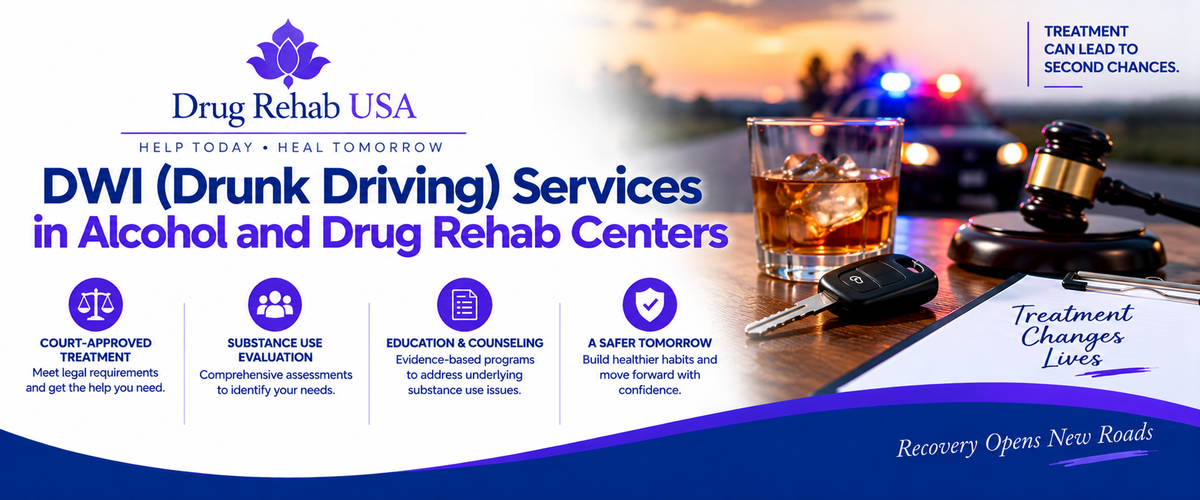
Driving while intoxicated (DWI) is one of the most common crimes associated with alcohol and drug addiction. In addition to being a primary indicator of a substance use disorder, it’s also a behavior that can severely disrupt your life and permanently damage the lives of those who are impacted. If you’ve been arrested for DWI, you’re most likely facing the prospect of hefty fines, loss of your driving privileges, and even jail time. You may, however, be able to opt for treatment rather than incarceration, which would require you to comply with the terms of your drug court sentence and work with a rehab center that offers DWI services.
How Does the Process Work?
The sequence of treatment following a DWI conviction is different for everyone, but for most people, it will start with an order from a drug court judge following a recommendation from a prosecutor. Others may opt to enter treatment voluntarily once they realize their drinking has gotten out of control.
If you’ve been ordered to enter rehab as a result of a DWI offense, you will most likely learn the parameters of your rehab requirements upon sentencing. The process will start with the judge and prosecutor outlining sentencing and compliance terms, after which it will be up to you or your loved one to find a facility for treatment. Your sentencing guidelines may explicitly mandate inpatient treatment or leave the type of care you receive to your discretion. In some cases, drug courts may have established relationships with specific treatment facilities to make the process of finding help easier and allow you to begin your program immediately.
What Services Will My Rehab Program Provide?
Each facility offers different clinical programs and medical resources, but treatment will usually consist of a combination of group therapy, one-on-one counseling, and supplemental therapies to enhance the quality and impact of care and help you develop coping mechanisms to avoid relapse during long-term recovery. Facilities may also offer detox and withdrawal management provided by trained doctors and nurses, either onsite or at a partner facility.
Case Management and Drug Court Navigation Services: The facility you choose may also provide case management services to help you stay in compliance with your program, document your progress, and communicate with the drug court or prosecutor’s office regarding your program status and completion.
While the process is different for each facility, some of the more common DWI services that rehabs may provide include, but are not limited to:
- Attending court proceedings on your behalf to verify your program compliance
- Assisting with the completion of legal paperwork
- Regular reporting and check-ins with drug court personnel
These programs can be a lifeline for those who are facing lengthy jail time and significant legal expenses. These services may be handled by a specially appointed liaison, your case manager, your clinical team, or a combination of relevant personnel. Appropriate representatives may also be able to verify your ongoing program compliance or successful completion of treatment.
Am I Eligible for Treatment After My DWI?
Each person’s specific legal history and circumstances will determine their eligibility for treatment rather than incarceration following a DWI conviction.
However, some factors that may affect your eligibility include:
- Your age
- Multiple offenses within a brief period
- Significant injury or property damage caused by impaired driving
- The current status of your driver’s license
- Whether or not you’re on probation
It’s important to realize that all 50 states have zero-tolerance laws that make it illegal for drivers under age 21 to operate a vehicle with a measurable amount of alcohol in their system. These laws generally establish a Blood Alcohol Concentration (BAC)—the percentage of alcohol in your bloodstream—limit of 0.02% or lower for drivers under 21. Penalties and enforcement vary by state and jurisdiction and may include mandatory alcohol education, treatment, or other legal consequences.
Should I Choose DWI Services?
While each person’s legal situation is different, DWI services can provide an alternative to navigating your state’s legal system on your own. In many cases, rehab may be court-ordered as a condition of your DWI sentencing agreement, making compliance mandatory. You should work with your attorney or legal representative to determine whether DWI services are appropriate for your situation.
How Do I Find a Program?
You will likely be given a specific timeframe in which to find a program and begin your treatment. Because this is a time-sensitive matter, it helps to look for a program in your area that accepts your insurance. Contact the admissions department of the facility you’re considering to determine whether they can work with you to meet your court requirements, complete your treatment program, and get the help you need. You can use our nationwide directory to find rehabs that help with DWI services.





