
Most insurance plans will cover either all or a portion of the treatment.

Navigation:
- Overview
- Why Is Food Important in Addiction Treatment Programs?
- Benefits of Drug Rehabs with Freshly Prepared Meals
- Food and Withdrawal Symptom Relief: What’s the Connection?
- Foods That Fight Inflammation
- Foods That Aid In Digestive Health
- Find Rehabs That Offer Freshly Chef-Prepared Meals
Overview
When someone makes the decision to go to treatment, they need and deserve quality, nutritious, and culturally appropriate food options during their program, whether they’re seeking inpatient or outpatient care. The unfortunate reality is that it doesn’t take much for patients to leave their programs in the early stages of treatment, which is one reason relapse rates remain unacceptably high among first-time treatment recipients. A lack of quality food options is among the common factors that can quickly erode patient satisfaction and negatively impact the treatment experience.
Aside from being an inherently right and just course of action—and a signal to patients that they’re seen, heard, and valued—offering freshly prepared meals that fit their dietary needs, cultural or religious beliefs, and health routines is another way to help prevent dropouts or against-medical-advice (AMA) discharges.
Comfort, quality, routine, and familiarity are key components of the addiction treatment process, and this often begins with the food served at patients’ rehab facilities. Whether you or your loved one is looking for a residential or outpatient program, you can get help at a treatment center that offers freshly prepared meals and snacks.
You have enough to worry about when you’re battling the personal fallout from substance use disorder. The last thing you should have to worry about is the quality of food at your program or whether your dietary restrictions will be respected.
Why Is Food Important in Addiction Treatment Programs?
It’s easy to discount the importance of the food that treatment centers serve and assert that the most important component of a treatment facility is the quality of its clinical care. The reality, however, is that food plays an incredibly important role in the rehab experience in multiple ways. It’s an integral part of the physiological healing process, particularly in the early stages of recovery. The body is working to heal itself on many fronts, and proper nutrition can aid considerably in that process.
People rarely prioritize their nutritional health when they’re in the throes of addiction. When they get to rehab, however, their treatment center can and should help them immediately start to reverse course by providing quality meals and snacks and educating them on proper food choices and their role in holistic recovery. Many facilities claim to offer a biopsychosocial approach to addiction treatment, and the right food choices in recovery are integral to the “bio” part of this approach.
Benefits of Drug Rehabs with Freshly Prepared Meals
Addiction takes a serious toll on the body and a person’s daily routine, both of which can be directly tied to poor eating habits:
- It’s incredibly difficult to maintain proper nutrition when you’re battling personal issues related to substance use.
- The body can experience significant vitamin and nutrient deficiencies as a result of prolonged substance use, making proper nutrition and quality food especially important during treatment.
- Many participants have dietary preferences or requirements (vegan, vegetarian, gluten-free, kosher, halal, etc.) that they want or need to maintain during treatment.
- Finally, food plays a key role in the treatment experience because it can make participants more comfortable, happier, and more inclined to continue their care.
Food and Withdrawal Symptom Relief: What’s the Connection?
In addition to being a source of comfort for patients vulnerable to relapse, food in rehab can offer important nutritional benefits during recovery. One of the most immediate ways these benefits can take shape is during the withdrawal process. Certain foods may help support the body while patients experience common physical withdrawal symptoms, including but not limited to:
Foods That Fight Inflammation
- Fatty Fish – Fish rich in omega-3 fatty acids, such as tuna, salmon, and sardines, may help combat inflammation.
- Fruits and Vegetables – Blueberries, strawberries, kale, spinach, and other colorful produce provide antioxidants and important nutrients that support overall health.
- Nuts and Seeds – Walnuts and almonds provide healthy unsaturated fats and vitamin E, which support immune-system health and help protect cells from free radicals.
- Healthy Oils – Extra-virgin olive oil contains compounds associated with anti-inflammatory effects.
- Herbs and Spices – Turmeric and ginger contain compounds known for their anti-inflammatory properties.
Foods That Aid in Digestive Health
- Yogurt – Yogurt containing active cultures provides probiotics (beneficial live bacteria) that can support digestive and gut health.
- Apples – Apples are rich in pectin, a type of soluble fiber that can help support digestive regularity and gut health.
- Ginger – Ginger may help support digestion and can aid gastrointestinal motility.
- Chia and Flax Seeds – These are excellent sources of soluble fiber, which can help promote feelings of fullness and support healthy digestion.
- Leafy Greens – Kale, spinach, chard, and other leafy greens are packed with fiber, magnesium, and other nutrients that can help support digestive regularity and overall gut health.
Other foods and beverages, such as eggs and green tea, can provide nutrients or compounds that may support energy and alertness. The admissions representatives at the facility you or your loved one is considering can provide more details about the food options available in their program and whether they’ll be able to accommodate specific dietary needs, preferences, and restrictions.
Find Rehabs That Offer Freshly Chef-Prepared Meals
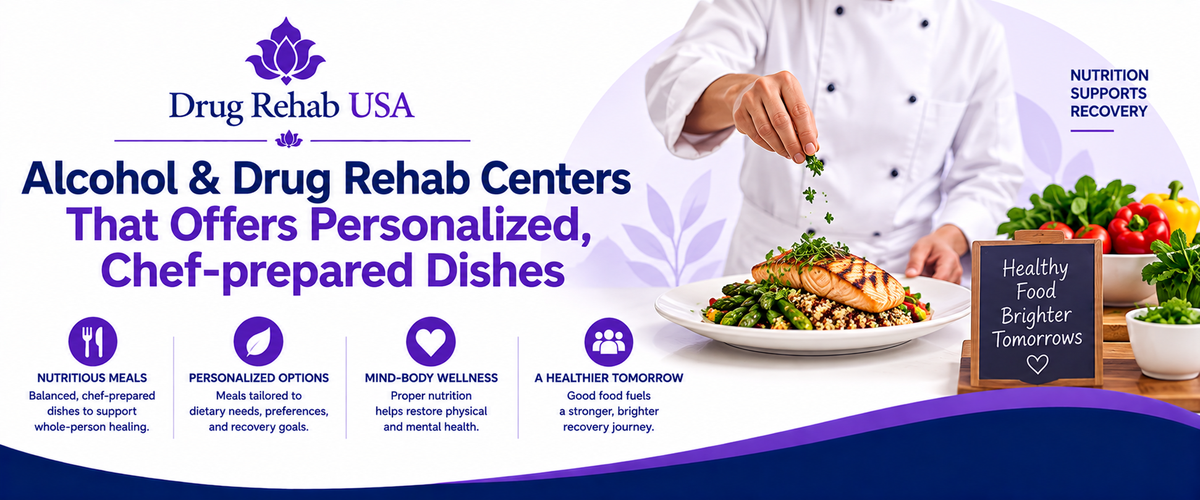
Explore alcohol and drug rehab centers that offer freshly prepared meals as part of their treatment programs. These facilities may provide chef-prepared meals, nutritious menu options, snacks, and accommodations for specific dietary needs or preferences, including vegetarian, vegan, gluten-free, kosher, halal, allergy-sensitive, and other specialized diets. Quality nutrition can be an important part of the recovery experience, helping individuals maintain healthy eating habits while focusing on treatment. Use our directory to find drug and alcohol rehabs that prioritize fresh, nutritious meals and a comfortable treatment environment.





