
Most insurance plans will cover either all or a portion of the treatment.

Content Reviewed By:
SUD treatment executive, national news contributor & keynote speaker.
Navigation:
- Overview
- How Effective Is TMS Therapy?
- How Does TMS Therapy Actually Work?
- Is TMS Therapy Safe?
- TMS Therapy and Substance Use Treatment
- Is TMS Therapy Covered by Insurance?
- Find Rehabs That Offer TMS Therapy
Overview
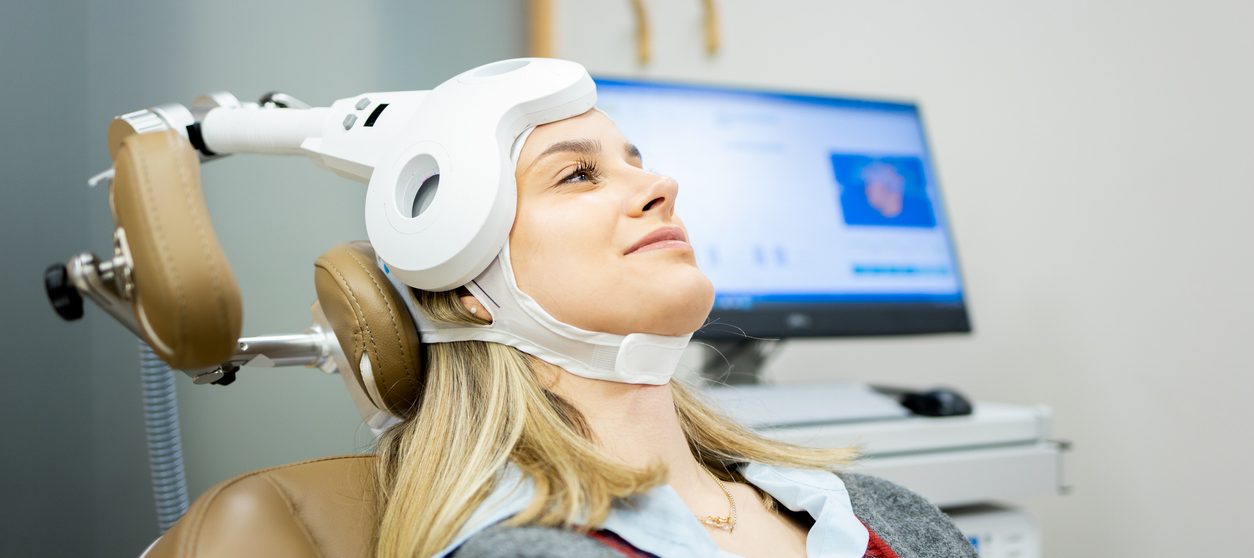
More and more rehab centers are offering a modality commonly used to treat certain types of depression and other mental health conditions called transcranial magnetic stimulation (TMS) therapy. TMS therapy is a pain-free and non-invasive therapy that works by using magnetic fields to stimulate nerve cells in the brain, commonly associated with impulse control and emotional regulation, with the aid of a specially designed helmet. It’s a safe and approved form of treatment that can be an ideal option for those who are adverse to or can’t take medication.
TMS therapy sessions typically last around half an hour to 40 minutes and are often covered by insurance, usually for the treatment of depression. As part of a comprehensive treatment program, TMS therapy can help patients manage their cravings, better control their emotions, and achieve success in long-term recovery.
How Effective Is TMS Therapy?
TMS therapy has been found to be demonstrably effective in the treatment of depression, obsessive-compulsive disorder (OCD), migraine, and a range of other health conditions. The Food and Drug Administration (FDA) approved the first TMS therapy device called NeuroStar, as a daily monotherapy for adults with major depressive disorder who have failed to respond to at least one course of antidepressant treatment with an adequate dosage and duration.
Approval was granted after a comprehensive body of research indicated that TMS was an effective than its placebo counterpart in reducing depressive symptoms at weeks 4 and 6 as measured by the Montgomery-Asberg Depression Rating and Hamilton Depression Rating scales. Since being approved for certain types of major depressive disorder, TMS therapy has been approved by the FDA to treat OCD and migraine, specifically for migraine with aura.
Although not currently approved for treatment, it has shown promising potential for the management of certain types of anxiety disorders and migraine issues. Research is ongoing as to the viability of using TMS as an alternative to medications, due to the potential for fewer long-term neurological side effects and diminished potential for dependency.
How Does TMS Therapy Actually Work?
TMS therapy is administered through high-frequency magnetic pulses at a specific location outside the cranium to provoke electrical currents inside the patient’s brain. This is done in an effort to activate the neurons in the prefrontal cortex, the area of the brain responsible for, among other important functions, emotional regulation. It is a non-invasive procedure generally performed in an outpatient setting, unless offered as part of a comprehensive inpatient treatment experience. Patients remain conscious during the procedure, and it requires no anesthesia of any kind. Patients generally undergo TMS therapy for an average of four to six weeks, depending on patients’ progress and ongoing care needs. The ultimate goal of the process is to have the magnetic pulses from the device stimulate nerve cells in the dorsolateral prefrontal cortex, activating underactive areas of the brain to help improve symptoms like sadness, decreased energy, and diminished motivation. While each person will respond differently to TMS therapy, it has generally proven to be an effective adjunct therapy as part of an overall care plan.
Is TMS Therapy Safe?
TMS therapy is considered to be a safe and effective therapy. Side effects are generally milder in nature and may include:
- Moderate Headaches
- Discomfort in the Scalp
- Temporary Involuntary Facial Movements
- Lightheadedness
- Mild Dizziness
If these symptoms persist or worsen over time, please notify your TMS practitioner and primary care physician. It’s important to note the difference between TMS therapy and the other brain stimulation therapy known as electroconvulsive therapy (ECT). While both therapies are used to treat depression, and ECT may be recommended for more severe cases, it’s also significantly more invasive, requires anesthesia, and involves the use of electrical currents directly to the brain. Some of the severe risks associated with ECT include, but are not limited to, memory loss, heart issues, and stroke.
TMS Therapy and Substance Use Treatment
The profound and undeniable link between depression and substance use disorder has prompted more and more treatment centers to offer TMS therapy as part of their programming. Patients may undergo TMS as part of their overall treatment plan in addition to group therapy, individualized counseling, and other appropriate modalities. It can be offered as part of inpatient or outpatient care, depending upon facility resources. TMS can be administered at various stages of the treatment process, including during and after patients’ specific treatment programs.
Is TMS Therapy Covered by Insurance?
While each person’s scope of coverage will vary according to their exact insurance plan, TMS is generally covered by private and public insurance. The best way to determine if your insurance will cover TMS is to contact your provider and assess your eligibility. Your coverage may depend on your past treatment history, whether or not you’ve been on medications for depression or OCD, and other factors.
Find Rehabs That Offer TMS Therapy
Use our nation wide directory or rehab centers that offer TMS Therapy as part of an overall addiction treatment plan.





